Biochar as a Specialty Carbon Materials Platform
Advanced materials demand control. Battery systems, high‑performance polymers, and cementitious products are engineered to tight specifications where small changes in carbon structure, purity, or porosity can shift performance, reliability, and cost.
Standard Biocarbon works from the application backward. Biocarbon is engineered through feedstock selection and thermal processing to meet defined performance requirements as hard carbons, biographite, activated carbons, and functional fillers. Microstructure, surface area, and impurity levels are tuned for specific roles in batteries, supercapacitors, functional chemicals, polymers, and building systems—not adapted after the fact.
For materials, R&D, and product teams, that specification‑first approach creates a controllable variable inside complex systems. Think of it as a precision carbon toolkit—intentionally designed to deliver the structure, conductivity, and reactivity advanced materials require while remaining carbon‑negative across the value chain.
The Science Behind Engineered Biochar Carbons
Feedstock choice matters. So do pyrolysis conditions and post-treatment steps. Together, these variables define downstream behavior. The material may function as hard carbon, biographite, activated carbon, or a functional filler.
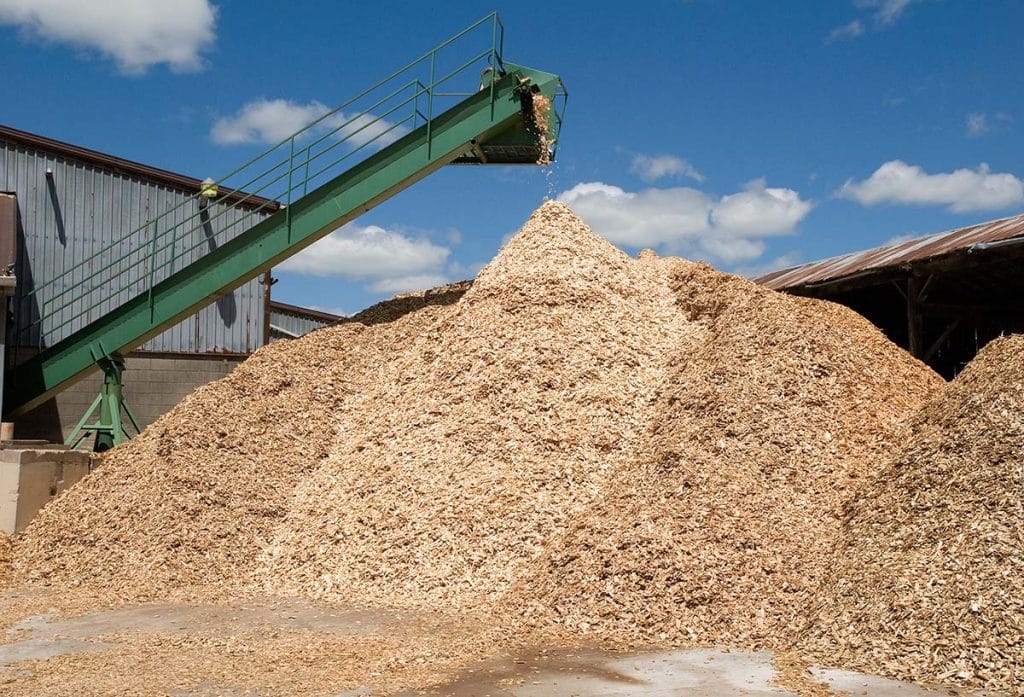
High-lignin hardwoods and selected agricultural residues provide high fixed-carbon yield with negligible ash. This forms a stable base for advanced material use.
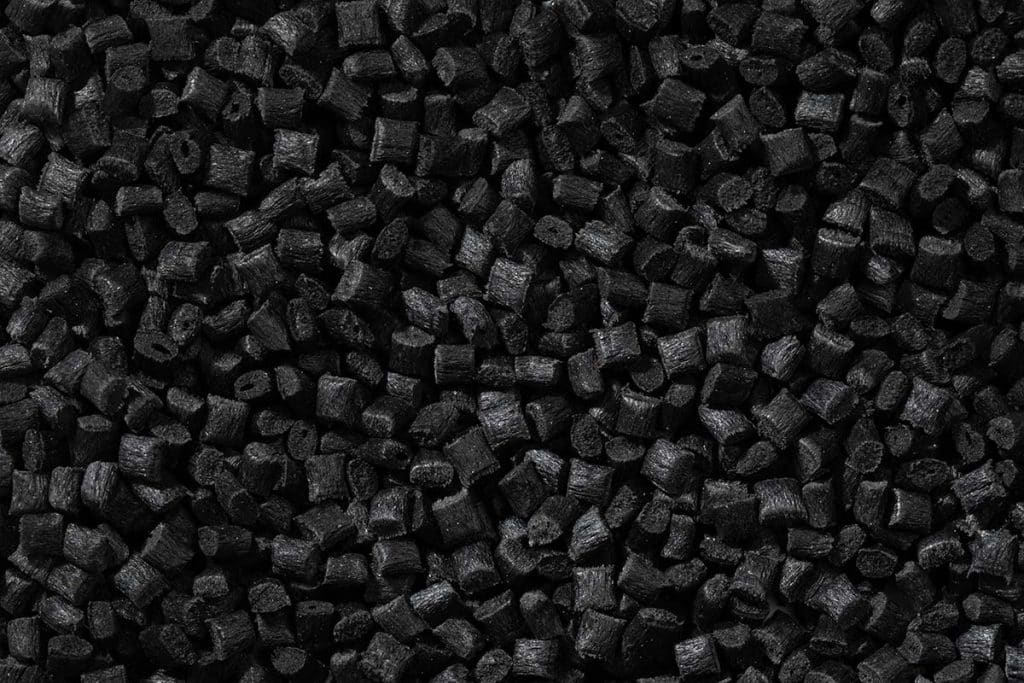
Thermal processing under an inert atmosphere defines microstructure. Moderate temperature regimes produce amorphous, turbostratic hard carbons. Higher-temperature regimes, combined with catalytic graphitization, produce graphitic carbons used in lithium-ion anodes and conductivity additives.
Activation and surface functionalization refine pore networks and surface chemistry. Steam or CO₂ activation increases surface area. Surface group control affects interfacial behavior in electrolytes, polymers, coatings, and cementitious systems.
Quality control focuses on carbon content and ash. Impurity levels, pore structure, and bulk conductivity are monitored. Specification windows align with conventional carbon and graphite suppliers.
Performance Where Advanced Materials Are Tested Most
Energy Storage: Anodes and Supercapacitor Electrodes
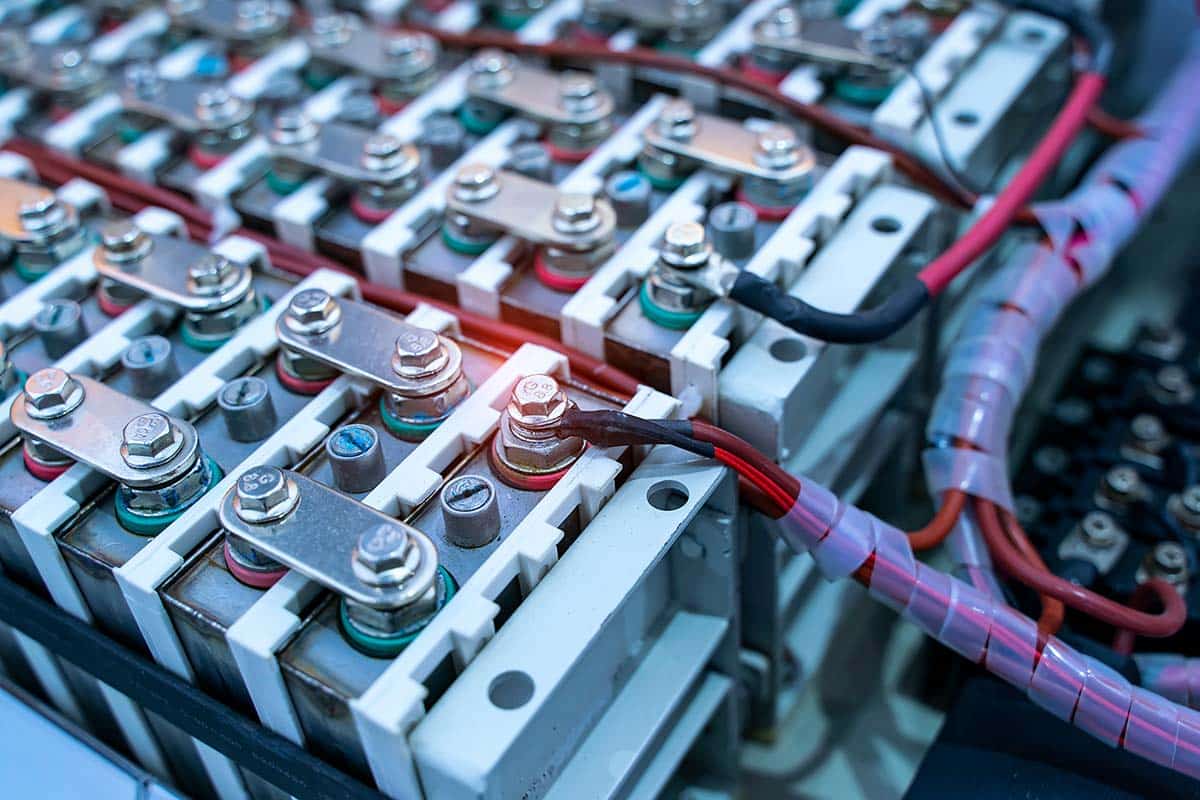
Energy storage systems are hard on carbon materials. Cycle count matters. So does stability.
Lithium-ion and sodium-ion anodes operate across thousands of charge–discharge cycles. Supercapacitor electrodes are built for rapid cycling and high power delivery.
Biochar-derived biographite is produced with controlled carbon purity and interlayer spacing. Impurity levels are managed tightly. These characteristics align with lithium-ion anode requirements and allow substitution for synthetic graphite in selected systems.
Biochar-derived hard carbons behave differently. Their amorphous, turbostratic structure and closed-pore networks support sodium-ion anode operation, where capacity retention and rate performance depend on microstructure rather than long-range graphitic order.
Activated biochar carbons are used where surface area dominates performance. Pore accessibility and distribution are tuned for supercapacitor electrodes operating under demanding charge–discharge conditions.
Surface area, pore size, and bulk conductivity are specified within defined ranges. Durability and safety remain constraints.
Electrochemical testing is used to validate performance. Formal specification windows support application-specific grades for grid-scale and utility-scale energy storage systems.
Functional Carbons in Polymers and Composites
Polymers and composite systems rely on fillers to tune performance. The wrong filler can disrupt processing or stability. The right one becomes part of the formulation.
Biochar-derived graphitic carbons are used as reinforcing fillers in polymer systems. They support improved modulus and dimensional stability across common polymer chemistries.
When conductivity is required, these carbons are specified to reach electrical percolation thresholds. Typical use cases include:
- Antistatic packaging
- EMI-shielding components
- Sensor-enabled materials
Thermally conductive biocarbon fillers are used for heat management in high-performance polymers. Use cases vary by system. Power electronics is one driver. Lighting is another. Aerospace applications place their own demands on thermal transport.
Biochar-derived fillers can reduce embodied carbon in composite products. This aligns with OEM Scope 3 targets without changing material function.
Pigments, Catalysts, and Chemical Platforms
Many specialty chemicals and coatings depend on carbon materials. Color matters. Surface area matters. In some systems, catalytic behavior is the driver.
Conventional carbon blacks and activated carbons are often fossil-derived. Their impurity profiles are receiving more scrutiny.
Biochar-derived carbon blacks offer renewable sourcing with low PAH levels and controlled metal content. These properties support use in inks and coatings. Plastics and textiles are part of that picture as well, particularly where tone consistency and flow behavior are critical.
Surface oxidation and particle-size control are used to tune appearance and handling. Blackness and gloss can be adjusted. Electrostatic behavior is specified when required for conductive inks, masterbatches, and functional coatings.
High-surface-area biochar and activated carbons are also used as catalyst supports. In other cases, they function as doped carbons for electrochemical reactions. Selective sorbent applications follow a different set of constraints.
In each case, structure and surface chemistry are matched to the system. Reaction control, adsorption, and separation place different demands on the material. The renewable, carbon-negative origin remains constant.
Cementitious and Building Systems
Construction materials face growing pressure to reduce embodied carbon. Strength and durability still set the bar. Cement and concrete formulations are one of the levers.
Biocarbon can partially replace portland cement. It can also function as a fine filler in cementitious systems. Strength development is one outcome. Reduced permeability is another. Durability targets remain central.
Displacing a portion of clinker reduces embodied CO₂. Stable carbon is introduced at the same time. Structural performance is preserved when mixes are designed to spec.
In concrete and lightweight blocks, biochar fines support lower density with maintained mechanical properties. Mix design determines where the benefit lands.
Permeable pavements and stormwater systems use biochar differently. Pore structure supports drainage. Water retention can improve. Pollutant capture becomes part of the system behavior.
Advanced Materials Applications
Frequently Asked Questions
Battery and capacitor systems place strict demands on carbon. Purity is one. Interlayer spacing is another. Pore structure and surface area are treated as design inputs, not afterthoughts.
Hard carbon and biographite are produced under controlled thermal regimes. Impurity levels are managed tightly. Electrochemical validation is used to confirm fit for the target system.
For supercapacitors, activated biochar is used where high surface area and pore accessibility are required. Conductivity is specified to match the electrode design. Rapid charge–discharge behavior follows.
Biochar stores biogenic carbon. That carbon remains stable in many downstream uses.
Substituting biochar-derived materials for a portion of fossil-derived carbons can reduce embodied CO₂ in batteries and composite products. Cementitious systems are part of that as well.
Scope 3 targets often drive adoption. Regulations and procurement standards are moving in the same direction.
Key parameters include carbon content, ash content, and individual impurity levels, along with BET surface area, pore‑size distribution, interlayer spacing (for graphitic grades), bulk conductivity, and particle‑size distribution.
Representative windows for lithium‑ion biographite, sodium‑ion hard carbon, and supercapacitor activated carbon provide a basis for formalized grades and spec sheets.
Generic biochar is often produced for broad soil or landscape use. Feedstock and processing conditions vary. Downstream performance is not always the target.
Engineered biochar for advanced materials is produced with a specific end use in mind. Microstructure is controlled. Purity is controlled. Particle properties are controlled. Characterization verifies those parameters. Testing is used when required.
The goal is consistency. A reliable component in a high-performance supply chain.
Yes. Engineered biochar carbons are designed to align with established processing windows for electrode manufacturing, polymer compounding, pigment dispersion, and cement and concrete production.
Attributes such as particle‑size distribution, tap density, flowability, and compatibility with existing formulations are considered so substitution or partial replacement can occur with minimal disruption.
Built for Advanced Materials. Produced with Intent.
Advanced materials rarely fail because of a single component. They struggle when inputs do not behave as expected under real operating conditions and over long lifetimes. That is where Standard Biocarbon takes a different approach to biochar‑derived carbons.
Standard Biocarbon starts with performance and specification requirements, not undifferentiated output. Biochar is produced from clean, consistent woody biomass and thermally processed to deliver hard carbons, biographite, activated carbons, and functional fillers tuned for defined applications in energy storage, specialty chemicals, polymers, and building systems.
Manufacturing is designed for repeatability, from feedstock selection through thermal processing, activation, and quality assurance. That supports the creation of formal grades, spec windows, and co‑development programs with partners in batteries, supercapacitors, composites, and cementitious products.
Rather than supplying a generic biochar, Standard Biocarbon provides engineered carbon materials that integrate into existing manufacturing workflows and advanced systems. The value is reliability: carbon‑negative materials that meet demanding technical requirements and support long‑term performance.
Biochar-derived carbon materials? Click here to start the conversation
Partner With Standard Biocarbon
Energy storage, specialty chemicals, polymers, and building systems all depend on carbon materials that behave predictably under stress, over time, and at scale. Standard Biocarbon works with technical teams to develop and supply biochar‑derived carbons produced to specification and aligned with application‑specific requirements.
If you are evaluating biochar as a platform for advanced carbon materials, the right starting point is a technical conversation. We will help you determine where biochar‑derived carbons fit in your systems and how they should be specified to support your performance and decarbonization goals.