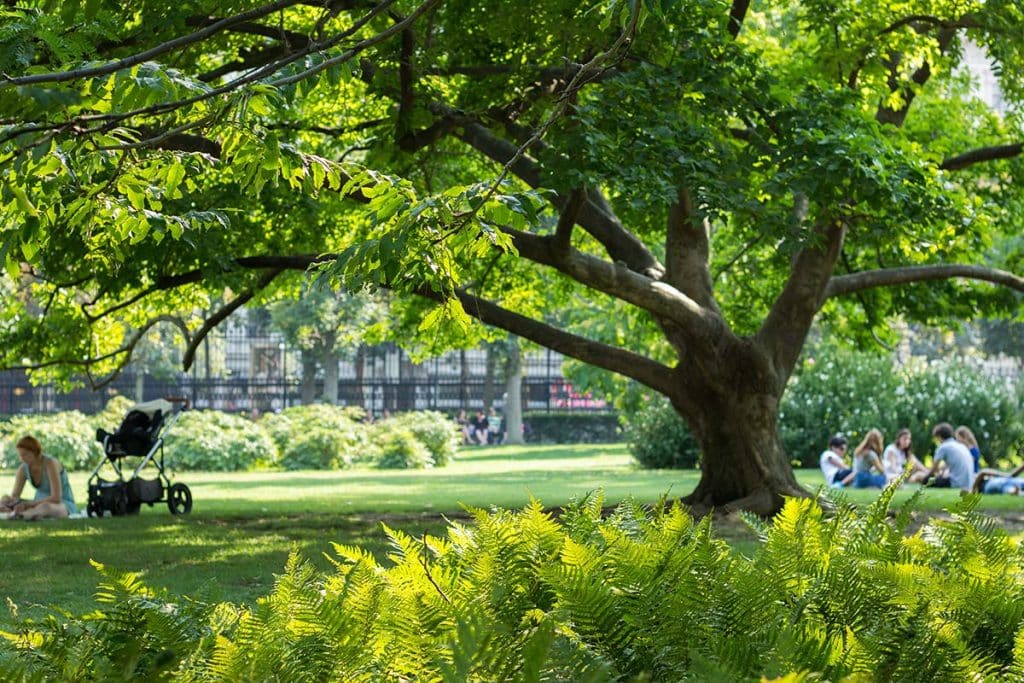
Biochar for Landscaping & Tree Services
Better soils, stronger plantings, fewer callbacks
Commercial landscape and tree systems demand control. Planting beds, backfill zones, and restored areas are installed on tight schedules, then left to perform under traffic, weather, and limited maintenance. Small differences in soil structure and moisture behavior show up quickly in establishment, root performance, and long-term survival.
Standard Biocarbon works from the site conditions outward. Biochar is produced to meet defined performance requirements based on how it will function inside commercial soil blends and tree root zones. Particle size, durability, and surface structure are matched to disturbed and urban soils, not adapted after the fact.
For contractors, grounds teams, and municipal programs, that specification-first approach creates a reliable point of control. Think of it as a stabilizing layer inside the mix — subtle, intentional, and designed to reduce corrective work after handoff.
Where landscape systems break down
Landscaping and tree services often inherit difficult ground. Fill soils are compacted. Contaminants are prevalent. Newly planted areas struggle to hold moisture once irrigation schedules change or crews move on.
Tree services face similar challenges. Backfill around root balls can dry out or collapse. Nutrients move too quickly through disturbed soils. Stress shows up months later, when correction is harder and more expensive.
These issues aren’t usually caused by poor workmanship. They’re structural soil problems that surface once sites are exposed to weather, traffic, and time.
Biochar is used in these systems not as a surface amendment, but as a way to change how soils function from the roots up.
Disturbed soils and loss of structure
Most large-scale landscape and tree installations begin on soils that have been stripped, blended, or compacted during construction. While these soils may meet specification at install, they often lack the internal structure needed to support roots over time. With the lost pore spaces and limited oxygen transfer, root growth diminishes unless intense care is provided throughout the season, a luxury most crews don’t have.
Biochar is incorporated into these soils to help preserve structure after placement. Its physical form supports pore continuity and reduces the tendency for soils to settle or seal. This is especially valuable in tree pits, backfill zones, and restored planting areas where long-term rooting volume matters more than short-term appearance.
Water movement after establishment
During installation, irrigation is frequent and the site gets watched closely. After handoff, water is what exposes the weak spots.
Some areas dry out fast, especially in sandy or heavily blended soils. Other areas stay wet longer than they should. That’s when roots start to struggle, and disease pressure can creep in.
Biochar can help smooth out that swing. It holds moisture without leaving the soil saturated. It also helps water move through the profile in a more even way. This doesn’t replace drainage design or irrigation planning. It simply reduces soil extremes as maintenance becomes lighter.
Nutrient loss in blended and amended soils
Landscape soils are often built with ease of installation in mind. Sometimes this sacrifices long-term gains in a system. After a season, irrigation and nutrient needs can become increased and need more assistance.
You don’t always see it right away. Beds look fine early, then performance gets uneven. One zone stays green while another is stagnant and dessicated. Crews compensate with extra fertilizer, extra irrigation, and the cycle continues.
Biochar helps keep more nutrients closer to where roots can use them. On large sites, that can reduce corrective inputs and make plant performance easier to manage over time.
Tree establishment and long-term root health
Tree crews see it all the time: planting looks right, then the tree just doesn’t take off. The issue is often below grade. Compaction, uneven moisture, and a low-oxygen root zone slow root expansion.
Biochar supports that root-zone environment. It opens up pore space and gives soil biology a place to work. Over time, roots have an easier path, and trees settle in with fewer stress signals.
Commercial landscaping and tree service projects often begin on compromised ground. Sites usually have poor conditions, but the client expects results. Biochar is used here to address the structural and biological pressures that show up after installation, when corrective work becomes costly.
Where biochar fits in landscaping and tree work
Improving soil behavior after installation
Biochar helps soils respond more evenly to those shifts. By increasing internal surface area, it improves how soils hold moisture without becoming saturated. Nutrients are less likely to flush out after heavy rain or irrigation cycles.
For tree services, that consistency matters during establishment. Roots encounter fewer dry pockets. Backfill stays workable longer. Stress shows up less quickly, even when conditions aren’t ideal.
The value isn’t dramatic growth spikes. It’s steadier performance and fewer interventions over time.
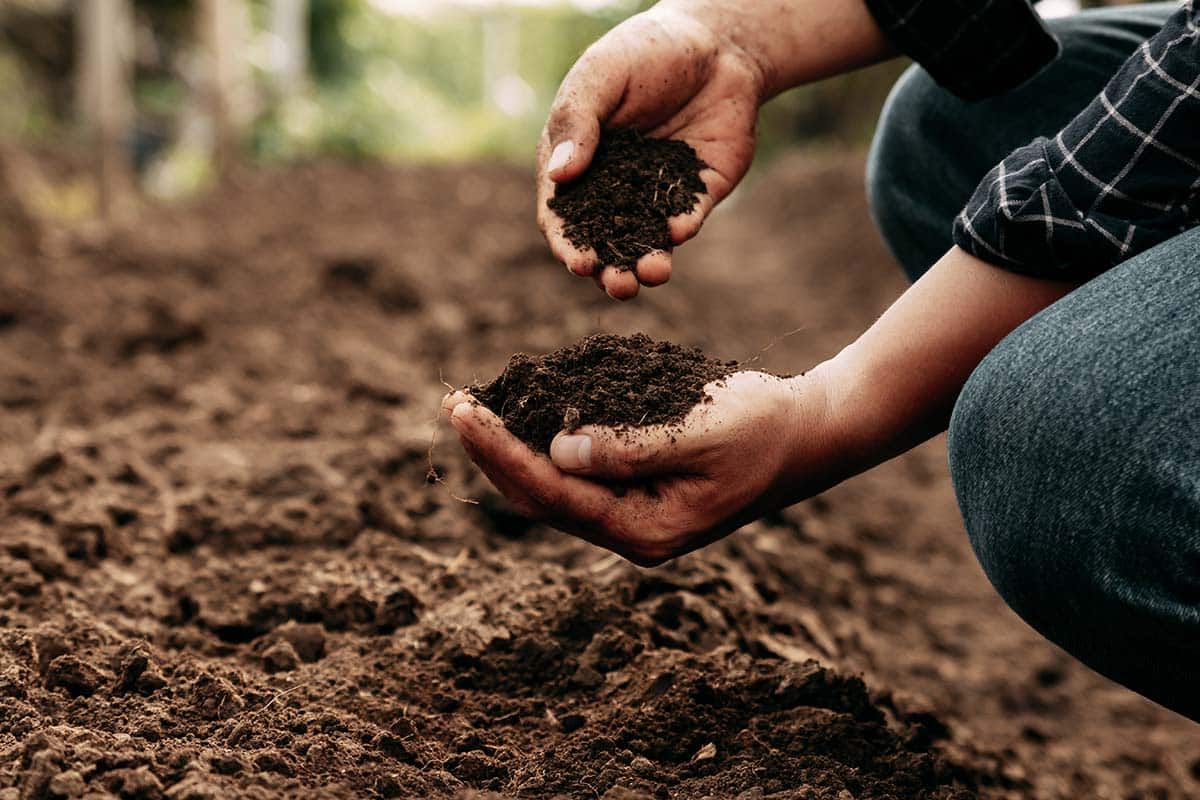
What Farmers and Growers Can Expect
How biochar moves through commercial landscape and tree systems
Biochar shows up in landscaping and tree service work at different stages, depending on how projects are planned and delivered. The material may enter through a soil blend months before installation, or it may be incorporated on-site during planting. In each case, performance depends on when biochar is introduced and what the soil system is expected to do afterward.

Entry point: soil blending and bulk supply
On large commercial and municipal projects, biochar often enters the system upstream. Regional soil blenders and bulk suppliers incorporate it directly into planting soils and structural mixes before material ever reaches the site.
At that stage, consistency matters more than almost anything else. Particle size and distribution are controlled inside the blend. Loads behave the same from delivery to delivery. Establishment across beds and planting areas is more uniform, with fewer surprises once installation begins.
This approach is most common on projects with repetition or scale. Municipal specifications, phased developments, and long-term maintenance contracts all benefit when variability is minimized early, rather than corrected later.

Installation phase: planting beds, backfill, and root-zone preparation
In other cases, biochar is introduced during installation. This is typical in planting beds, tree pits, and backfill zones where soils have already been disturbed by construction activity.
Problems tend to surface when root zones dry unevenly or remain saturated longer than intended. Those conditions can exist side by side on the same site, even under controlled irrigation.
Biochar helps moderate that behavior. Moisture moves more evenly through the profile. Root zones respond more consistently across changing conditions.

Post-install performance: durability after handoff
The real test of a landscape system begins after handoff. The newly built landscape is now subject to increased foot traffic and reduced maintenance intensity. Everything up to and including the weather puts pressure on these fresh plants.
These systems need inputs that persist. Unlike surface amendments that diminish quickly, biochar remains in place and continues to influence moisture behavior and nutrient availability as conditions change.
That persistence reduces the need for corrective work over time. Fewer repeat fertilizer applications. Less soil reconditioning. Fewer stressed plantings that need early replacement.
On large commercial properties and campuses, that durability can separate systems that stabilize from those that steadily degrade.

Municipal and high-pressure environments
Built for commercial landscape systems, not bagged fixes
Most biochar used in landscaping is sold as a generic material. It’s produced in bulk, packaged for flexibility, and expected to work across very different soil systems without adjustment.
Standard Biocarbon takes a different approach. Biochar is manufactured to meet specific performance requirements based on how it will be used. Soil blending, tree planting, and urban landscape applications place different demands on particle size, structure, and durability.
Those characteristics are controlled intentionally. Production choices affect how biochar interacts with water, nutrients, and soil structure once it’s installed. Small differences matter at scale.
Manufacturing takes place at a state-of-the-art facility in Maine, where feedstock and processing conditions are tightly managed. That control allows Standard Biocarbon to deliver material that behaves consistently across large projects and varied site conditions.
What ends up in the ground isn’t a generic amendment. It’s a purpose-built input designed to support long-term landscape performance.
Ready to strengthen your soils? Click here to start the conversation
Let’s talk about your project
Commercial landscaping and tree services operate under tight margins and long timelines. Soil decisions made early often determine how a site performs years later.
A conversation with Standard Biocarbon starts with understanding your application. From there, we can discuss how biochar is specified, produced, and applied to support your soil systems — whether that’s blending, planting, or long-term site management.