
Inoculation Guidance for Bulk Buyers
Raw biochar is highly adsorptive. In soil and compost systems, it should be inoculated or blended with biologically active materials before use so it supports nutrient availability instead of tying it up in the first season.
Many bulk customers:
Mix biochar with compost or active soil before field use.
Use liquid inoculants such as compost teas or fish‑based products.
Allow blends to “rest” before distribution or application, especially in spring programs.
Standard Biocarbon can discuss inoculation approaches that fit your process and connect you with partners who produce ready‑to‑use blends. This page focuses on the raw bulk product; program‑specific inoculation details are usually worked out directly with your agronomist, soil scientist, or technical team.
Many bulk customers:
Standard Biocarbon can discuss inoculation approaches that fit your process and connect you with partners who produce ready‑to‑use blends. This page focuses on the raw bulk product; program‑specific inoculation details are usually worked out directly with your agronomist, soil scientist, or technical team.

Why Standard Biocarbon for Bulk
Bulk buyers feel quality in how their systems run. Standard Biocarbon is set up to supply biochar as a dependable ingredient rather than a one‑off material.
Consistent feedstock – softwood residuals from a co‑located Maine sawmill, not mixed waste streams.
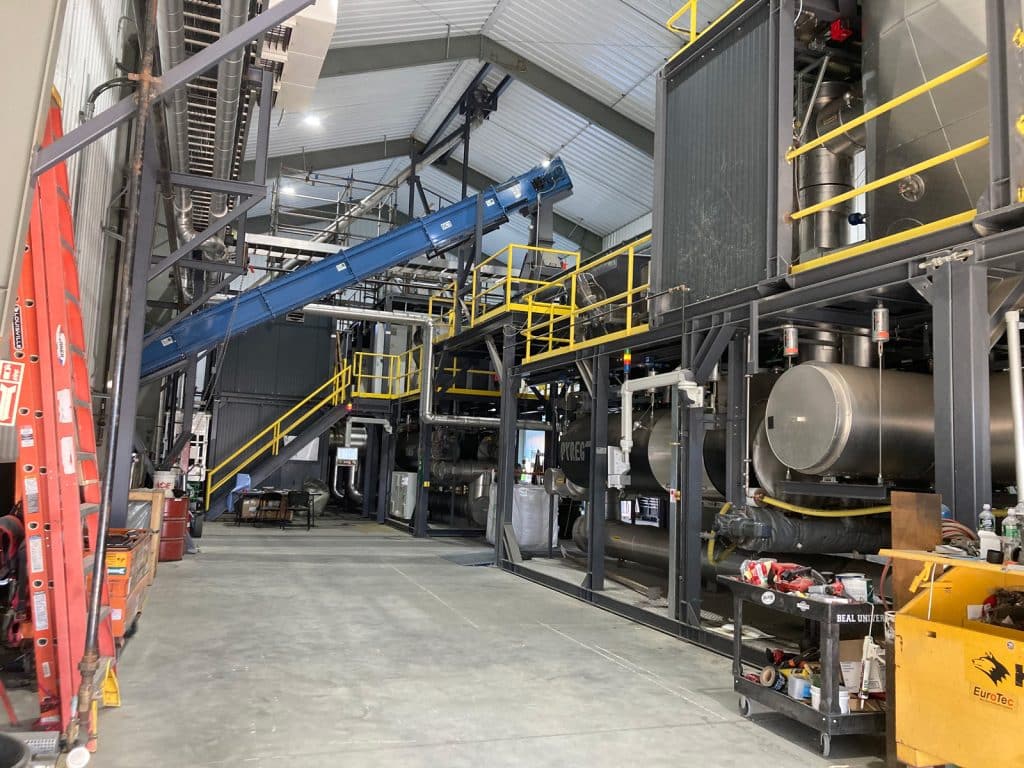
Controlled process – continuous, high‑temperature pyrolysis designed for wood, tuned for high carbon, low ash, and stable pH.
Specification‑driven – the same platform supports different grades for soils, filtration, and advanced materials, but every bulk load comes from a spec‑controlled process.
Regular testing – samples are sent to independent labs for ongoing verification; data can be shared so buyers can tie media properties to their own performance results.
For composters, soil manufacturers, landscapers, and materials companies, this means bulk biochar that behaves like an industrial input: reliable, repeatable, and ready to integrate.
For composters, soil manufacturers, landscapers, and materials companies, this means bulk biochar that behaves like an industrial input: reliable, repeatable, and ready to integrate.

Ordering & Availability
Standard Biocarbon bulk biochar is available:
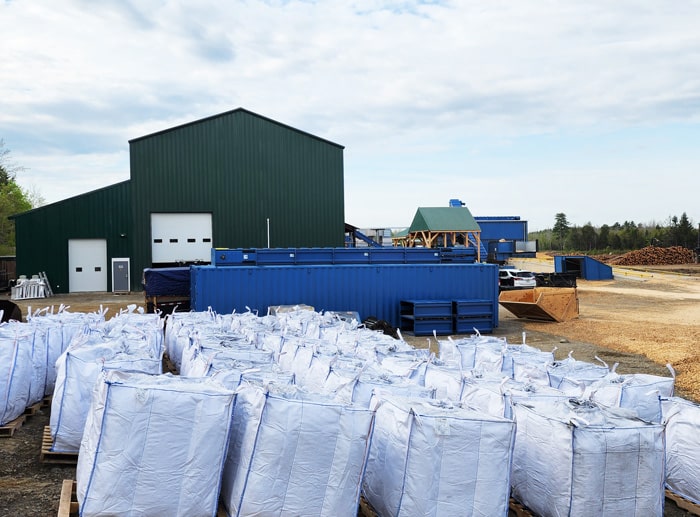
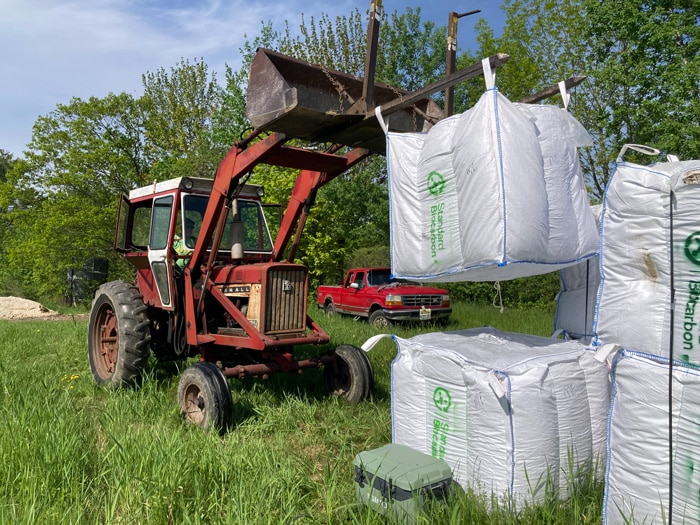
In two‑cubic‑yard supersacks, individually or by truckload (up to 88 cubic yards per flatbed).
FOB Enfield, Maine, with shipping coordinated throughout the Northeast.
Lead times depend on season and volume, especially for large projects or standing orders. For upcoming blends, construction windows, or production runs, contacting us early makes it easier to match supply, logistics, and project schedules.
Lead times depend on season and volume, especially for large projects or standing orders. For upcoming blends, construction windows, or production runs, contacting us early makes it easier to match supply, logistics, and project schedules.
